Wondering if that beautiful Animas Valley acreage is truly horse-ready, buildable, and worth the price? You are not alone. Buying land here can be exciting, but it also comes with details that can change your plans fast, from water rights to zoning to access. This guide will help you understand what to check before you buy so you can move forward with more confidence. Let’s dive in.
Why Animas Valley Land Needs Careful Review
Animas Valley is not a one-size-fits-all land market. According to the Animas Valley district plan, it is a narrow river valley with real physical constraints that can include floodplain, geologic hazards, wildfire exposure, and access issues.
That means two parcels with similar acreage can offer very different options. One may have better infrastructure and easier building conditions, while another may require much more review before you can confidently use it for horses, a barn, or a future home.
The district plan also notes an important split within the valley. The west side is generally more developed and more often served by central water and sewer, while the east side is generally lower density, more agricultural, and more likely to rely on wells and septic.
If you are comparing properties, location within the valley matters just as much as lot size. A parcel’s position near the Animas River, Highway 550, County Road 203, County Road 250, or the River Corridor District can affect what can be built, how dense development can be, and what utilities may already be available.
Start With Zoning And Overlays
Before you fall in love with a property, confirm the exact zoning district and whether any overlay rules apply. In Animas Valley, Chapter 65 makes the land use plan regulatory, which means the rules are not just general guidance.
The code identifies multiple residential districts, including 15-acre, 10-acre, 5-acre, 3-acre, 2-acre, and 1-acre areas, along with commercial, industrial, River Corridor, and neighborhood overlay districts. Those distinctions matter because allowed uses and lot standards can change from one parcel to the next.
Why Horse Use Is Not Automatic
If you are shopping for horse property, do not assume acreage alone makes a parcel a good fit. The key question is whether your intended use is allowed by right, allowed only with a permit, or limited by other standards tied to the district.
Some Animas Valley districts allow single-family residential, granny flats, and commercial livestock or agriculture-related operations by right. However, the lot-size thresholds and development standards vary, so the same use may work on one parcel and not on another.
District Rules Can Shape Your Plans
The 5-acre district is intended for areas that largely lack central water and sewer, and it caps impervious coverage at 50%. The 3-acre and 2-acre districts allow smaller lot patterns, while the 1-acre restricted district is intended for areas outside the 100-year floodplain that have central water and sewer.
These details can influence where you place a home, barn, paddock, driveway, or arena. They can also affect whether your long-term plans make sense on that specific parcel.
Check The River Corridor Early
For land near the Animas River, the River Corridor District deserves close attention right away. This district is defined on the east side by the 100-year floodplain boundary and on the west side by a 500-foot width from the river bank or the floodplain limit, whichever is closer.
If a parcel falls in this district, the rules are more restrictive. Structures may not be placed in the floodway or within 50 feet of the river bank, and new subdivision lots cannot be smaller than 12 acres.
That can directly affect where you can build and how the land can be divided in the future. If river frontage is part of the appeal, make sure you also understand the development limits that come with it.
Water Rights Matter More Than Water Features
In Colorado, water law follows prior appropriation. The state explains this system as one that controls who may use water, how much may be used, and when it may be used, with earlier valid water rights generally being satisfied first.
For buyers, the big takeaway is simple: water rights are separate from the land. A creek, ditch, or irrigation feature on the property does not automatically mean you have the right to use that water.
A Ditch Does Not Guarantee Usable Water
This is one of the most common rural land mistakes. If a ditch crosses the parcel, you may not own the right to use the water in it.
Colorado State University Extension notes that if you do not own deeded water rights on that ditch, you cannot take water from it or obstruct it. Water rights may be owned separately, leased, or administered through a district or ditch company rather than by the landowner.
Ditch Easements Can Affect Daily Use
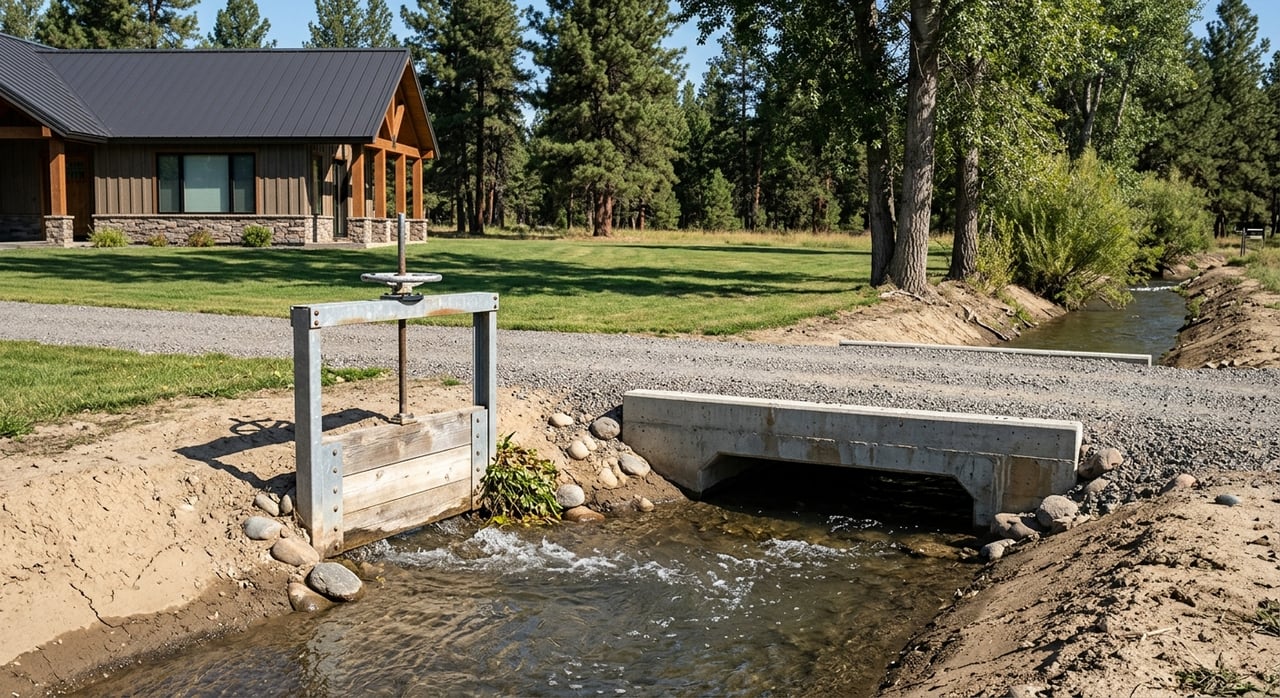
Colorado statute gives water-right holders important access rights across land between diversion and use. That includes the right to construct, operate, clean, maintain, repair, replace, line, or pipe the ditch, along with reasonable access to the ditch and ditch banks.
For you as a buyer, that means ditch easements, headgates, maintenance access, and historic use patterns should all be reviewed carefully. A great-looking pasture may come with obligations or access rights that affect fencing, landscaping, or how you use the land.
Ask Specific Water Questions
If a property is marketed as irrigated or horse-ready, ask for clear details instead of broad statements. Useful questions include:
- Are there deeded water rights or ditch shares tied to the property?
- Who administers the water delivery?
- What are the maintenance obligations?
- Where exactly is the ditch easement located?
- What has the historic water use looked like?
The Animas Valley district plan specifically points to the need for better owner awareness around irrigation rights and ditch maintenance. That is a strong signal that buyers should verify these items early.
Wells Need Verification Too
If a parcel relies on a well instead of ditch water, do not assume it will support your full plan. Well permits and use limits matter.
CSU Extension notes that many rural wells are household-use-only. In practical terms, that can mean no outside watering or livestock uses.
This is especially important if you picture green pasture, animals, wash areas, or a larger barn setup. A well that serves a home may not also support your horse-property goals.
The state also notes that county land-use staff may refer water-supply proposals for review, but a well permit cannot be confirmed until the required statutory evaluation is complete. So if water is essential to how you plan to use the property, verify the permit status and permitted uses before you commit.
Access Is A Legal Issue, Not Just A Convenience
A long private drive may feel peaceful, but access in La Plata County is more than a lifestyle feature. It is a due-diligence item with real legal and permitting requirements.
The county’s driveway-access standards state that most driveways in unincorporated parts of the county require a permit. If the driveway crosses other parcels or does not connect directly to a public road, legal access documentation is also required.
Just as important, the driveway is not considered legal until final inspection is complete. Buyers who want to build a home, barn, or arena should make sure access is fully documented and approvable, not just visible on a map.
What To Confirm About Access
Before you buy, review:
- Whether the parcel has legal recorded access
- Whether the existing or proposed driveway requires a permit
- Whether the driveway crosses other land
- Whether emergency-access details will need coordination
- Whether final inspection requirements have been satisfied
This can save you from costly surprises later, especially on land that looks straightforward at first glance.
Fencing, Septic, And Soil All Connect
On horse property, buyers often focus on the house site first and sort out the rest later. In Animas Valley, it is smarter to evaluate fencing, septic, soil, and drainage together.
Fences near ditches or roads can create problems if they interfere with maintenance or public safety. CSU Extension says ditch companies and water users can prohibit or condition fences across a ditch right-of-way, and county driveway rules allow fence or landscaping changes if they impede safety in the right-of-way.
That means a fence is not just a cosmetic feature. It can become an easement, access, or compliance issue.
Why Septic And Groundwater Matter
La Plata County’s hazard plan explains that shallow groundwater can weaken soils, affect foundations, and contaminate groundwater when paired with improperly designed on-site wastewater systems. That makes drainage, soil conditions, and septic siting important parts of the review process.
For horse properties, this matters beyond the home itself. Barns, corrals, wash areas, and future outbuildings can all be affected by site conditions and wastewater planning.
Wildfire Should Be Part Of Your Buying Checklist
Wildfire exposure is another real part of rural ownership in Animas Valley. The county describes local conditions as living-with-fire conditions due to arid climate, decreasing precipitation, strong winds, and fuel accumulation.
That does not mean rural property is off the table. It does mean you should look closely at site layout, vegetation, defensible space options, and home hardening if you plan to build or improve the property.
When you view acreage, think beyond the scenery. Ask how the parcel’s terrain, access, and vegetation may affect your long-term maintenance and safety planning.
A Smart First-Step Checklist
If you are reviewing a listing in Animas Valley, start here:
- Confirm the exact zoning district
- Check for any neighborhood overlay district
- Determine whether the parcel falls in the River Corridor District
- Verify whether horse or livestock use is allowed by right or subject to limits
- Review floodplain and slope concerns
- Confirm water source, water rights, ditch shares, or well permit limits
- Verify legal access and driveway permitting needs
- Review fencing, easements, and ditch maintenance access
- Evaluate septic, drainage, and soil conditions
- Consider wildfire exposure and defensible-space planning
In a market like Animas Valley, these details are not extra credit. They are the difference between buying land that fits your goals and buying land that creates expensive delays.
If you are thinking about buying land or horse property in Animas Valley, working with someone who understands the local parcel-by-parcel issues can make the process much smoother. Jeremy Deas offers straightforward guidance, local insight, and responsive buyer representation to help you evaluate rural property with confidence.
FAQs
What should you check first when buying land in Animas Valley?
- Confirm the parcel’s exact zoning district, any overlay or River Corridor status, and whether your intended use depends on deeded water rights, a well permit, or both.
Does a ditch on Animas Valley property mean you own the water?
- No. In Colorado, water rights are separate from the land, so a ditch crossing the property does not automatically give you the right to use that water.
Can you keep horses on any acreage in Animas Valley?
- No. Whether horse or livestock use works on a parcel depends on the zoning district, overlay rules, floodplain limits, and other parcel-specific standards.
Can a rural well in Animas Valley irrigate pasture or serve livestock?
- Not always. Some rural wells are household-use-only, which may limit outside watering and livestock uses.
Why does legal access matter when buying horse property in La Plata County?
- Legal access matters because driveway permits, recorded access documentation, and final inspection can all be required before access is considered legal for future use or development.