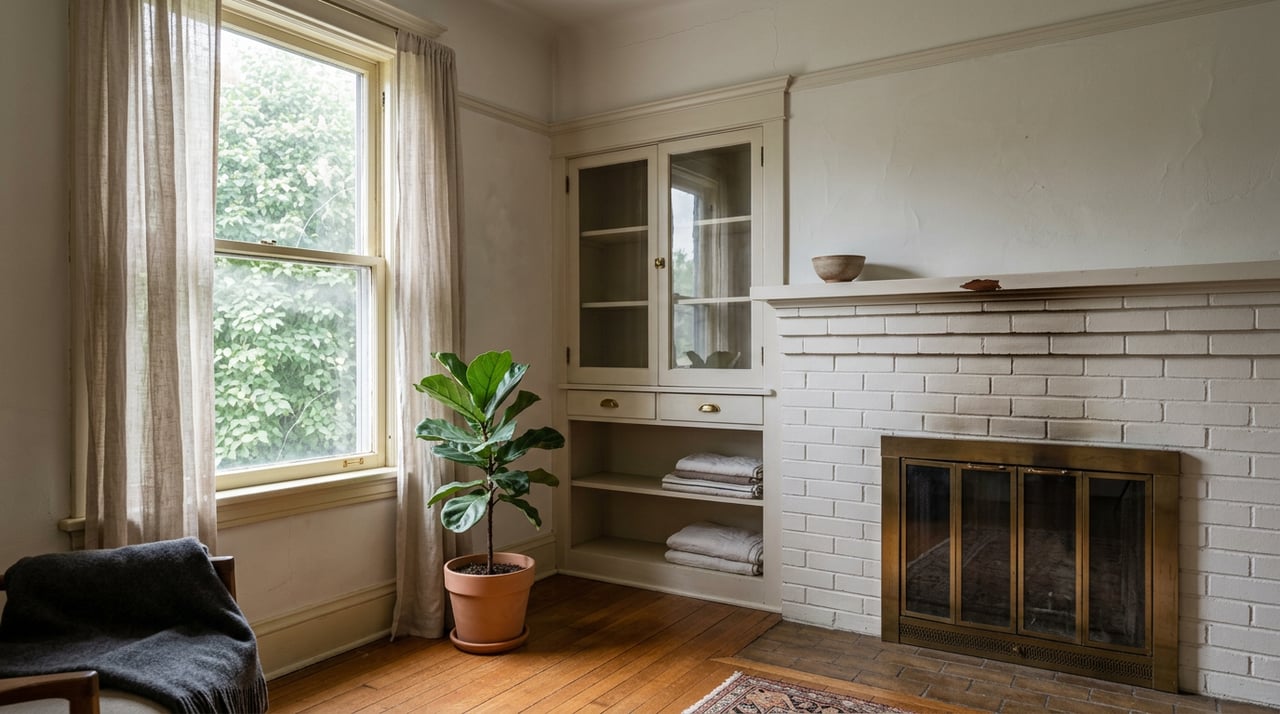
You are standing in the front room of a hundred-year-old bungalow two blocks off Third Avenue, admiring the original trim, and your first question is about paint colors. Can you repaint the porch? Do you need permission for a new front door? Will some board tell you no?
That worry is understandable. It is also, for most in-town Durango buyers, pointed at the wrong target. The restriction that actually governs what you can do to an old house here applies to a narrow slice of the neighborhood. The friction that actually costs money shows up later, after the contract is signed, when an insurance underwriter or a disclosure form asks a question you did not see coming.
The Rule Almost Nobody Triggers
Durango has one local historic district for residential property: the East Third Avenue Historic District. Properties inside it, along with anywhere the city has individually landmarked, need an Alterations Certificate before any exterior change, and the Historic Preservation Board reviews those projects against a set of design guidelines the neighborhood helped write. Even paint has to come from a pre-approved historic color palette, available at River City Hall on Camino del Rio.
That process is real, and it is active. In January 2025, the city moved forward with landmarking the old Durango High School at 201 E. 12th Street, a building the city purchased back in November 2023 specifically because the Historic Preservation Board wanted it preserved. This is a functioning local government process with a paper trail, not a dusty ordinance nobody enforces.
But here is what most buyers get backward: National Register listing does not create these obligations by itself. Durango's other well-known historic district, the Main Avenue Historic District downtown, has been on the National Register since 1980, covering roughly 34 acres and originally 86 contributing buildings out of 104. That listing documents significance and can unlock state preservation tax credits. It does not, on its own, put your porch swing under design review. Only local landmark status or a spot inside East Third Avenue does that, and the city's own permit guidance draws that line explicitly.
| East Third Avenue District or individually landmarked | Everywhere else in-town, including National Register-listed blocks | |
|---|---|---|
| Exterior paint, siding, windows | Alterations Certificate required, HPB review | No local design review required |
| Demolition | HPB review under city code before permit issues | State demolition permit only |
| State preservation tax credit eligibility | Yes, if 50+ years old | Not unless separately landmarked |
| What actually varies house to house | Design guidelines, streetscape rules | Wiring, plumbing, insurance eligibility |
The Paperwork That Actually Follows You to Closing
Colorado does not require a specific standard disclosure form by statute, but the Colorado Real Estate Commission's Seller's Property Disclosure is what nearly every transaction uses, and it asks for the seller's current actual knowledge as of the date it is signed. What trips people up is not the form's structure. It is the fine print about history.
The instructions on that form are blunt: sellers must check yes for problems "EVER EXISTING," not just problems still active. A roof leak fixed a decade ago still gets disclosed. In a neighborhood where the median home predates most current owners by generations, that "ever existing" standard has a lot of history to cover.
Layered on top of that is a federal requirement that has nothing to do with Durango's local landmark rules at all: any home built before 1978 triggers a lead-based paint disclosure, regardless of whether the house sits in a historic district, carries local landmark status, or is simply old. In-town Durango's housing stock skews toward exactly that era, which means this federal trigger applies far more broadly than the city's design review ever does.
What an Insurance Underwriter Actually Asks
This is the step that catches people who assumed the design review was the hard part. Here is roughly how it goes once you are under contract on a home built before the 1950s:
- Your insurance agent asks what type of wiring the house has.
- If the answer is knob-and-tube, several standard carriers decline outright, and the ones that will consider it usually require a licensed electrician's inspection report before quoting anything.
- If the report comes back clean, you may get coverage, often at a meaningfully higher premium than a rewired home would carry.
- If it does not come back clean, you are looking at a rewire before the policy binds, not after you move in.
The same pattern applies to plumbing. Homes built before the 1960s often ran galvanized steel or lead supply lines, and many insurers now require those replaced with copper or PEX before they will write full coverage. None of this is a Durango-specific ordinance. It is simply what national underwriting standards do when they meet a housing stock this old, and in-town Durango has plenty of it.
Why This Shows Up in the Median Price
The city's own market reporting shows how thin the in-town single-family segment really is, and thin markets move in odd ways. Across all of 2025, the in-town single-family median came in at $850,000 on 125 units sold, a figure that was down 8.5% year over year even as the number of units sold rose, a gap the local Realtor association's own year-end reporting attributes in part to roughly 40% more million-dollar-plus sales in 2024 than in 2025. By March 2026, that median had climbed back to $940,000 year-to-date, driven by the return of those higher-end trades.
The condo and townhome side of in-town Durango tells the same story from a different angle. The full-year 2025 median for that segment landed at $545,000. But in March 2026 alone, the reported median dropped to roughly $400,000 even as sales volume jumped sharply, a swing that has more to do with which units happened to close that month than with any real shift in value. When a market only produces a handful of sales at a time, one or two transactions can move the whole number.
That volatility matters for a historic single-family buyer specifically. A house that needs an $8,000 to $15,000 rewire and a plumbing upgrade is competing in a median that is already being pushed around by a tiny sales count. Sellers who get ahead of the electrical and plumbing questions before listing are not just avoiding a scare during inspection. They are protecting their place in a median that has very little room to absorb a discovered defect at the eleventh hour.
Before You Write, or Sign, Anything
A few habits separate a smooth in-town historic transaction from one that stalls at underwriting:
- Ask the city's Community Development Department, 970-375-4850, whether the specific address sits in the East Third Avenue Historic District or carries individual landmark status, before you assume any renovation plan needs board approval.
- If you are selling a pre-1978 home, get ahead of the federal lead-based paint pamphlet and disclosure now rather than at the closing table.
- If you are buying anything built before the 1950s, call your insurance agent before you go under contract, not after, and ask directly about wiring and supply line requirements.
- Read the Seller's Property Disclosure line by line rather than skimming it. The "ever existing" language means repaired problems still belong on the form, and a buyer's attorney will read it that way even if a seller does not.
A Few Direct Questions
Does a National Register listing restrict what I can do to my house? Not by itself. National Register status, like Durango's Main Avenue Historic District, documents historical significance and can open the door to preservation tax credits. Local design review only applies inside the East Third Avenue Historic District or on individually landmarked properties.
Is my in-town home old enough to trigger a lead paint disclosure? Any home built before 1978 triggers the federal disclosure requirement, separate from any city historic designation.
Can I actually get insurance on a home with knob-and-tube wiring? Sometimes, but usually only after a licensed electrician's inspection, and typically at a higher premium than a rewired home. Many lenders and insurers ask for that documentation before they will finalize anything.
None of this means an in-town historic home is a bad idea. It means the questions worth asking before you write an offer are different from the ones most buyers start with. If you are weighing a century-old house against a newer build, or trying to figure out what a specific address's wiring and disclosure history actually means for your closing timeline, that is exactly the kind of conversation SWCO Home Sales has with in-town Durango clients every week. Get a free home valuation and a straight answer about what your specific property will require, before you are staring at an underwriter's email wondering what happens next.